Diploma in Midwifery

New bike for Rev. Moses
In December 2024 we raised £14,540 towards our Livelihood project with the Big Give Christmas Challenge.
Finance
The funds raised increased access to affordable, sustainable financial services, including social insurance, savings and credit in local groups. Specifically, they helped pay the salaries for our Community Process Facilitators (CPFs). They support the livelihood groups with their knowledge of agricultural techniques and community savings.
They helped enable the 2168 women who used a community savings loan in the second quarter of 2025 – with a total value of £56,558. They used their loans for:
- hiring land for agricultural purpose
- operating small family businesses
- purchase of assets
- investment purposes such as building houses
The community savings also have a social fund which was used for:
- Paying medical bills for the household members
Paying school fees for their children - Social support e.g. providing assistance to vulnerable members such as elderly, widows, funeral support, and supporting people with disabilities.
- Support community events or cultural ceremonies to strengthen social cohesion

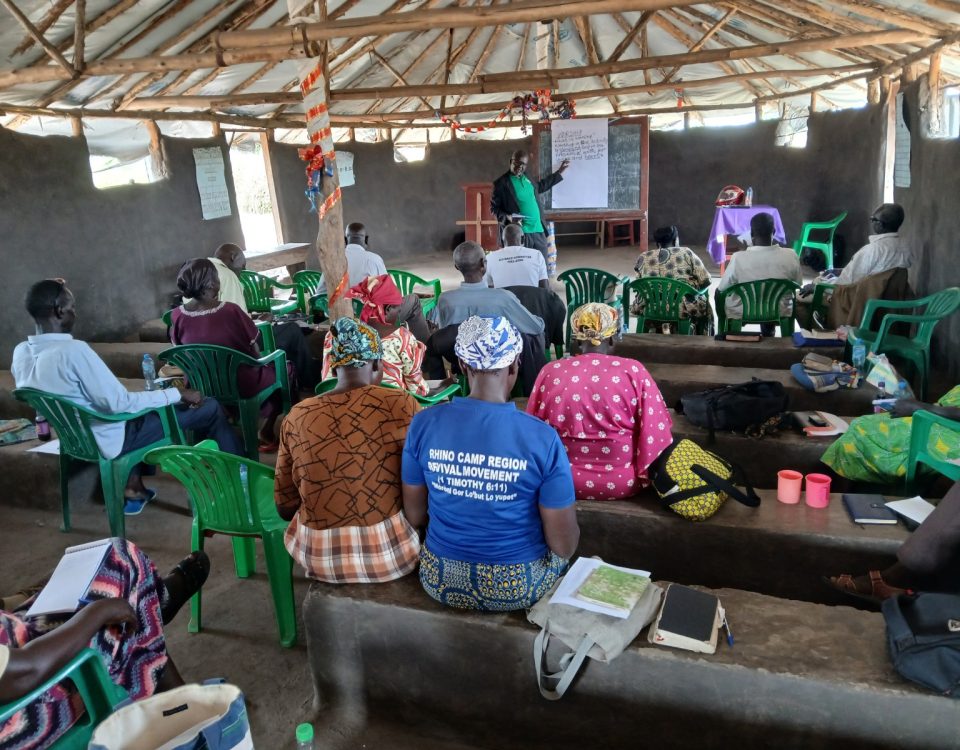
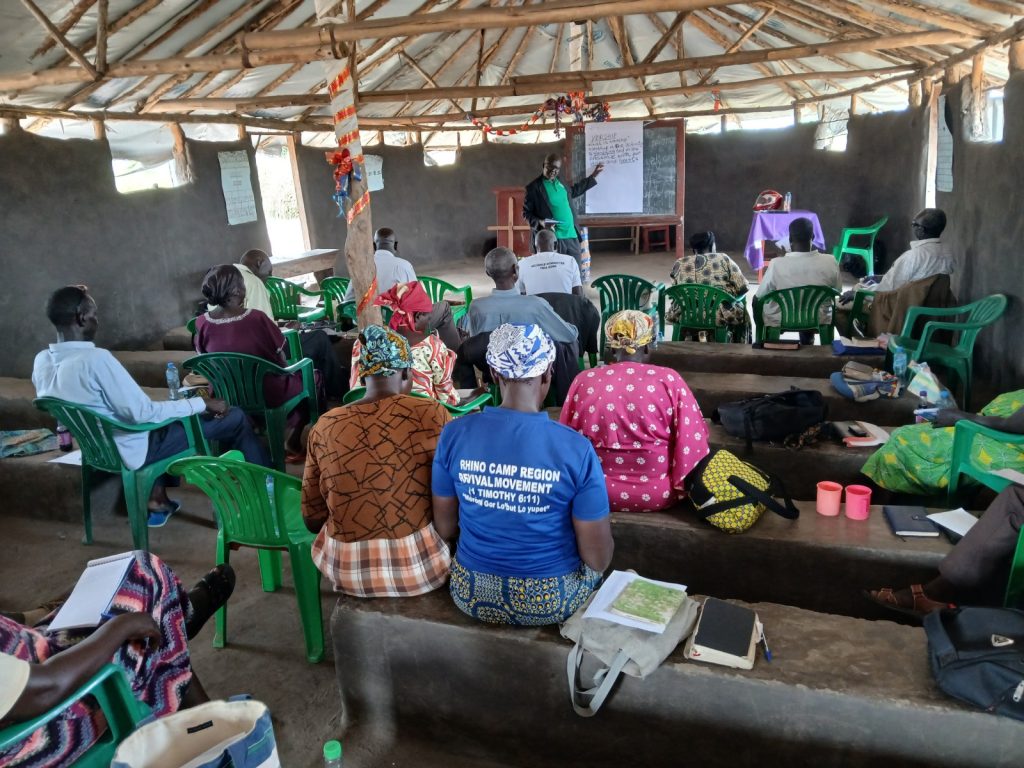
Above: Revive, one of our savings groups, during a meeting
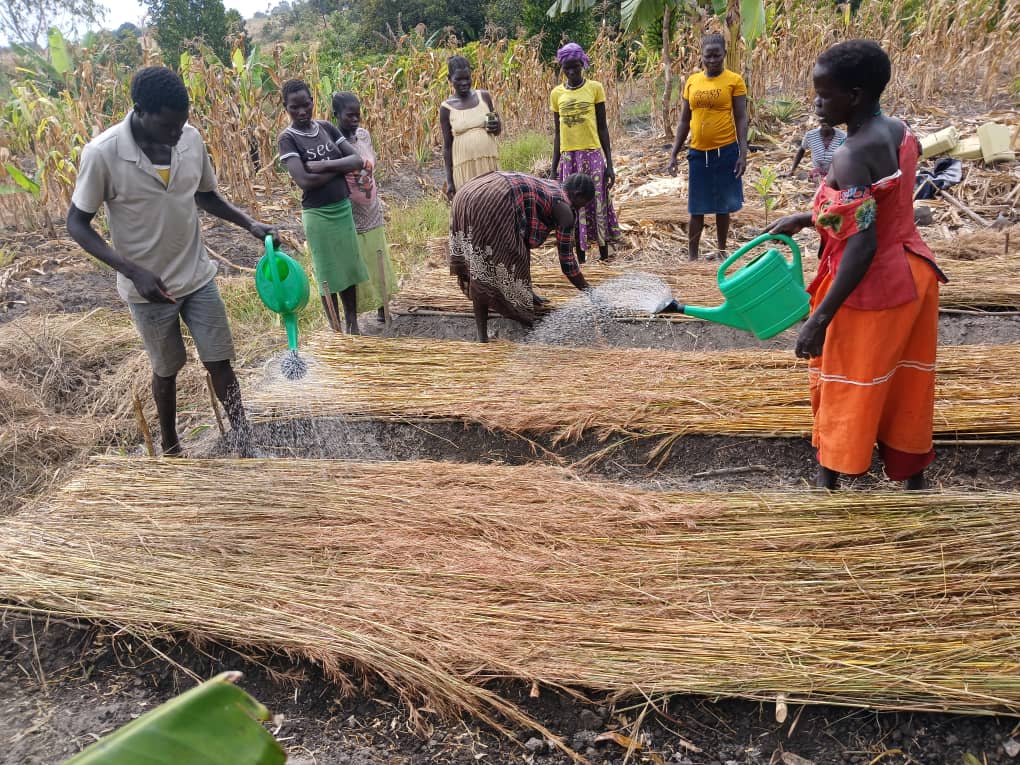
Below: Training being given on the community savings methodology


Business skills
The Big Give funding enabled CRESS train our group members and enhance business skills, entrepreneurship, and financial literacy skills. Our CPFs continued supporting them through the year.
Summary of small scale businesses group members are successfully engaged in;
• Selling general merchandise
• Charcoal selling
• Growing and selling vegetables.
• Operating salon businesses
• Operating mobile money businesses
• Operating hotel businesses
• Operating boda-boda
This knowledge means refugees can manage enterprises and secure gainful employment increasing their ability to manage the medical, educational and material needs of their households. In all our groups in the second quarter of 2025 1,140 members were engaged in business.
Food security
Food security in the region has been a huge challenge, especially this year with the removal of USAID and the knock-on effect on other organisations. The Big Give funding helped us reach remote refugee communities like those in Rhino Camp, Imvepi and Mijale.
We trained lead farmers in 29 groups.
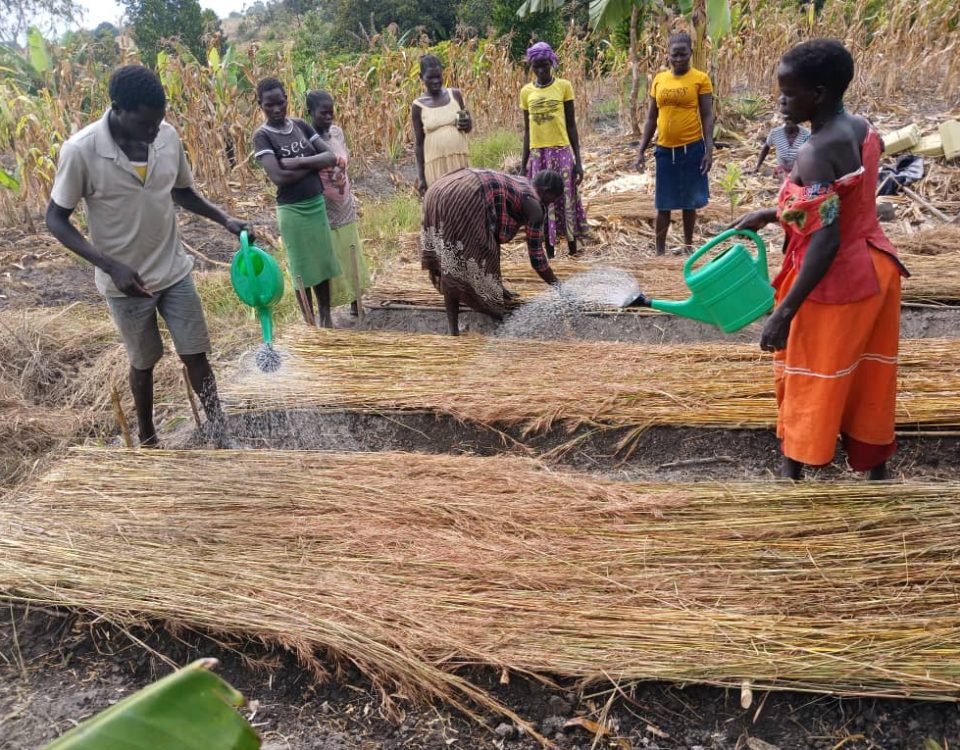
The training covered climate-smart agricultural techniques and the groups were also provided with agricultural inputs – seeds and tools. The lead farmers and CPFs work together to instruct and help the group members so they could build their gardens and grow their own food and extra to sell.
Group members report they are now able to eat more than once a day with a greater variety of food (not just maize) – so nutrition has been improved.

Member Stories

My name is Peresi Juru, a member of Sadia Savings Group. Through the savings and training I received from the group, I decided to invest in a poultry business, specifically rearing layers.
I began with 30 birds, unfortunately I lost 5 along the way. The remaining 25 hens have started laying, producing at least 2 eggs per hen per day, which I sell at the local market.
This poultry project has enabled me to provide food for my family, afford medications, and pay school fees for my children. These improvements in my household are a direct result of my active participation in the group.
I sincerely extend my heartfelt thanks to CRESS UK and CRESS Africa Foundation for their invaluable support in helping me start and grow my business.

At just 18 years old, Kiden Annet’s dream of continuing her education was cut short when she dropped out of school due to lack of school fees.
Determined not to give up, she joined Pamugun Community Savings and Credit Group, supported by CRESS Africa Foundation. With the skills and support gained, Annet chose onion farming as her enterprise.
Today, she proudly celebrates a bountiful onion harvest that has given her hope and the means to return to school. Her journey is a true testimony of resilience and how savings groups are transforming lives.
Challenges
There have been significant climate-related issues with unseasonal weather and storms. The limited number of CPFs have not managed to train all the groups on the climate-smart agriculture practices yet. Since March 2025, and going forward, we have adopted the farmer-to-farmer approach, which has been well received by the beneficiaries, and they recommend that it be rolled out to all group members. It has a greater multiplier effect at minimal cost.
We have also learned that many of the groups did not have compost manure near their gardens. The CPFs are helping the groups build compost manure areas with their gardens so that they have organic fertiliser for boosting their productivity.
Businesses have been set up as a result of the financial literacy training. Group members with businesses desire to expand their business but are limited with the low loanable savings available in the group. They desire to have a larger fund that can boost their businesses at interest. We would like to invest in an enterprise growth fund for the existing groups rather than form more new groups in 2026.
Refugees are only allocated 30m x30m of land for their homestead. This is mostly for building the house and growing some vegetables and crops. With food distribution having ceased, refugees have to look for extra land to increase food production to ensure food security. They usually go to the host community and hire an extra plot of land for growing crops like the field crops ( cassava, maize, groundnuts, simsim, beans) we supplied. They hire 1/4 of an acre at 15$ per year.
The challenge is that most of the landlords they hire land from do not allow them to rehire the same land in the following year. They are forced to find new land which will require more costs of land preparation (bush clearing, digging etc).
The proposed solution, after speaking with the Office of The Prime Minister is that they (OPM) will approach the landlords. This means organisations like CRESS, that need to hire blocks of land, can go to OPM for support with the coordination and then guarantee access to the land for a reasonable price and period.
In summary
Below are the positive changes CSCG members are directly experiencing in their households as a result of the Community Savings and Credit Groups (CSCG) intervention.
- Access to finances
- Improved family welfare through access to basic needs.
- Improved health standards of household members.
- Increased family savings.
- Increased market access
- Increase knowledge and skills transfer and management.
- Increase access to nutritious foods.
- Increased income after selling the excess vegetables.
- Improved health standards of household members.
- Increased family savings.
- Increased market access
- Increased access to productive assets
- Increased access to education support